Basic Elements
See Electrical Elements for complete class definitions for these elements.
Two-terminal
Two-terminal devices subclass schemdraw.elements.Element2Term, and have leads that will be extended to make the element the desired length depending on the arguments.
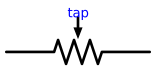
All two-terminal elements define start, end, and center anchors for placing, and a few define other anchors as shown in blue in the tables below.
Some elements have optional parameters, shown in parenthesis in the table below.
Resistors
Resistors elements change style based on IEEE/U.S. vs IEC/European style configured by schemdraw.elements.style().
Selectable elements, such as Resistor, point to either ResistorIEEE or ResistorIEC, for example.
IEEE Style
IEEE style, common in the U.S., is the default, or it can be configured using
elm.style(elm.STYLE_IEEE)
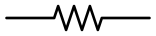
Resistor
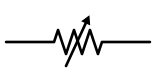
ResistorVar
Potentiometer
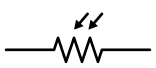
Photoresistor
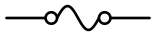
Fuse
IEC/European Style
IEC style can be enabled using
elm.style(elm.STYLE_IEC)
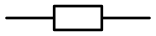
Resistor
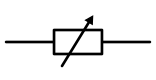
ResistorVar
Potentiometer
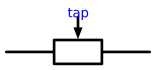
Photoresistor
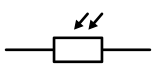
Fuse
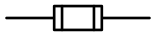
All Resistors
Either IEEE or IEC styles are always available with these Elements.
ResistorIEEE
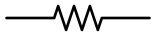
ResistorIEC
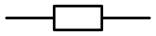
ResistorVarIEEE
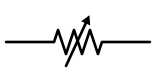
ResistorVarIEC
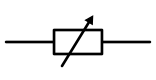
PotentiometerIEEE
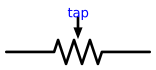
PotentiometerIEC
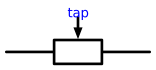
PhotoresistorIEEE
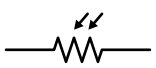
PhotoresistorIEC
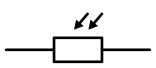
FuseUS
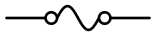
FuseIEEE
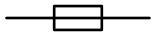
FuseIEC
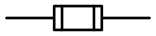
Rshunt
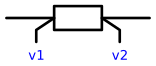
Capacitors and Inductors
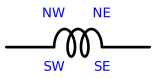
Inductors have anchors intended for easy positioning of a mutual inductance dot near the element.
Capacitor
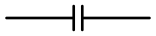
Capacitor(polar=True)
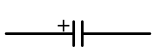
Capacitor2
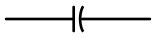
Capacitor2(polar=True)
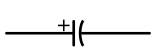
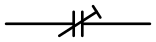
CapacitorVar
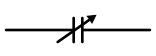
CapacitorTrim
Inductor
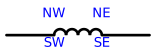
Inductor(core=True)
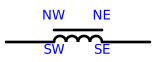
Inductor2
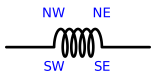
Inductor2(loops=2)
Diodes
All diodes may be filled by passing fill=True.
Diode
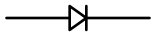
Diode(fill=True)
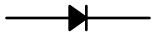
Schottky
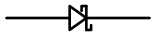
DiodeTunnel
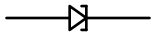
DiodeShockley
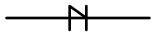
Zener
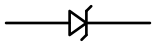
DiodeTVS
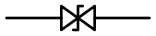
Varactor
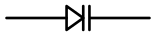
LED
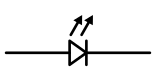
LED2
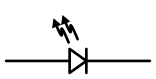
LED(fill=’red’)
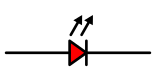
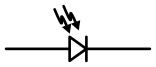
Photodiode
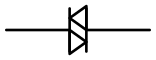
Diac
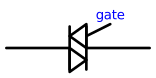
Triac
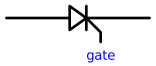
SCR
Miscellaneous
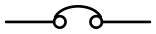
Breaker
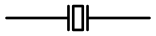
Crystal
CPE
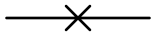
Josephson
Josephson(box=True)
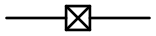
Motor
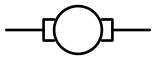
Lamp
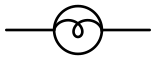
Lamp2
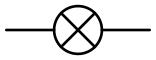
Neon
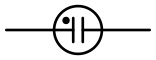
Thermistor
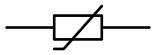
Memristor
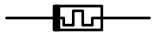
Memristor2
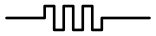
Jack

Plug

Terminal

SparkGap
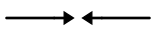
Nullator
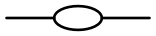
Norator
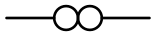
CurrentMirror
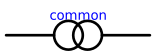
VoltageMirror
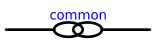
Sources and Meters
Source
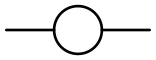
SourceV
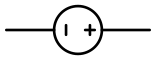
SourceI
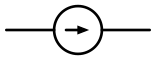
SourceSin
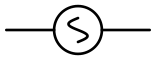
SourcePulse
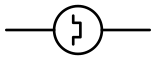
SourceSquare
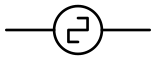
SourceTriangle
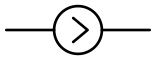
SourceRamp
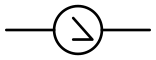
SourceControlled
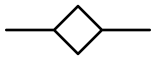
SourceControlledI
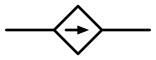
SourceControlledV
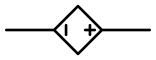
BatteryCell
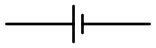
Battery
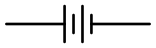
BatteryDouble
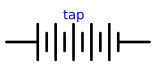
Solar
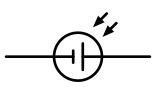
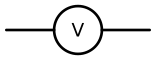
MeterV
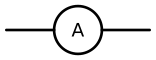
MeterA
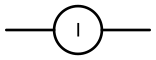
MeterI
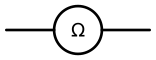
MeterOhm
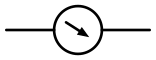
MeterArrow
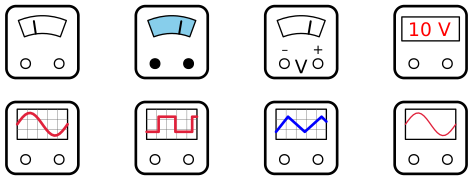
Box-Style Meters
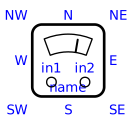
MeterAnalog
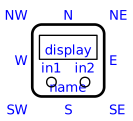
MeterDigital
Oscilloscope
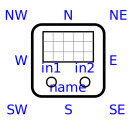
The “Box” style meters have many configuration options. See class definitions for more details. Some examples are shown below.
with schemdraw.Drawing() as d:
    elm.MeterAnalog(needle_percent=30)
    d.move(2)
    elm.MeterAnalog(window_fill='skyblue', input_fill='black').anchor('in1')
    d.move(2)
    elm.MeterAnalog().label('V', loc='name').label('–', loc='in1', fontsize=10).label('+', loc='in2', fontsize=10).anchor('in1')
    d.move(2)
    elm.MeterDigital().label('10 V', loc='display', color='red', fontsize=14).anchor('in1')
    elm.Oscilloscope(signal='sine').at((0, -2))
    d.move(2)
    elm.Oscilloscope(signal='square').anchor('in1')
    d.move(2)
    elm.Oscilloscope(signal='triangle', signal_color='blue').anchor('in1')
    d.move(2)
    elm.Oscilloscope(signal='sine', signal_lw=1, grid=False).anchor('in1')
Switches
Button
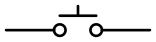
Button(nc=True)
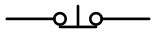
Button(contacts=False)
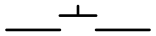
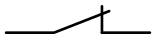
Switch
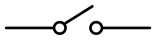
Switch(nc=True)

Switch(action=’open’)
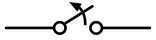
Switch(action=’close’)
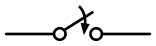
Switch(contacts=False)
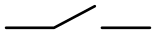
Switch(contacts=False, nc=True)
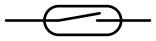
SwitchReed
Lines and Arrows
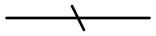
Line

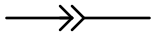
Arrow

Arrow(double=True)

DataBusLine
Also see Connecting Elements.
Single-Terminal
Single terminal elements are drawn about a single point, and do not move the current drawing position.
Power and Ground
Ground

GroundSignal

GroundChassis

Vss

Vdd

Antennas
Antenna

AntennaLoop

AntennaLoop2

Connection Dots
Dot

Dot(open=True)

DotDotDot

Arrowhead

NoConnect

Switches
The standard toggle switch is listed with other two-terminal elements above. Other switch configurations are shown here.
Single-pole double-throw
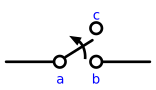
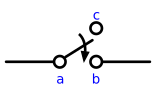
Two options for SPDT switches can be also be drawn with arrows by adding action=’open’ or action=’close’ parameters.
SwitchSpdt
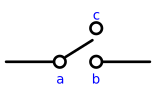
SwitchSpdt2

SwitchSpdt(action=’open’)
SwitchSpdt2(action=’open’)

SwitchSpdt(action=’close’)
SwitchSpdt2(action=’close’)

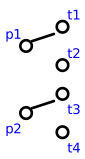
Double-pole
DPST and DPDT switches have a link parameter for disabling the dotted line lnking the poles.
SwitchDpst
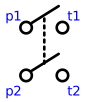
SwitchDpdt
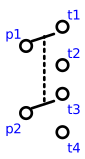
SwitchDpst(link=False)
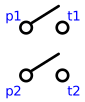
SwitchDpdt(link=False)
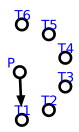
Rotary Switch
The rotary switch schemdraw.elements.switches.SwitchRotary takes several
parameters, with n being the number of contacts and other parameters defining the contact placement.
SwitchRotary(n=6)
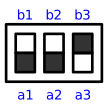
DIP Switch
A set of switches in a dual-inline package, where can show each switch flipped up or down.
See schemdraw.elements.switches.SwitchDIP for options.
SwitchDIP
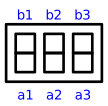
SwitchDIP(pattern=[0, 0, 1])
Audio Elements
Speakers, Microphones, Jacks
Speaker

Mic

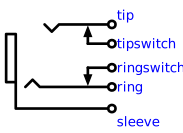
AudioJack
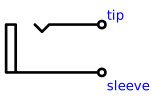
AudioJack(ring=True)
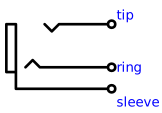
AudioJack(switch=True)
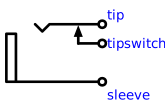
AudioJack(switch=True, ring=True, ringswitch=True)
Labels
The Label element can be used to add a label anywhere. The Gap is like an “invisible” element, useful for marking the voltage between output terminals.
Gap(label=[‘+’, ‘Gap’, ‘-‘])

Label(label=’Hello’)

Tag(label=’Tag’)

Operational Amplifiers
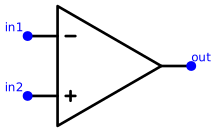
The schemdraw.elements.opamp.Opamp element defines several anchors for various inputs, including voltage supplies and offset nulls. Optional leads can be added using the leads parameter, with anchors exteded to the ends of the leads.
Opamp
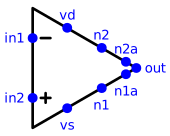
Opamp(sign=False)
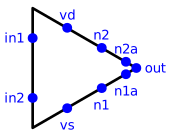
Opamp(leads=True)
Transistors
Bipolar Junction Transistors
Bjt
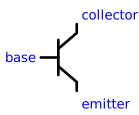
BjtNpn
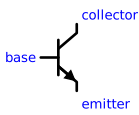
BjtPnp
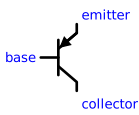
Bjt(circle=True)
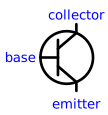
BjtNpn(circle=True)
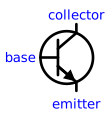
BjtPnp(circle=True)
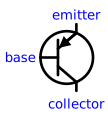
BjtPnp2c
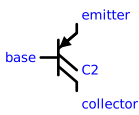
BjtPnp2c(circle=True)
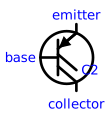
NpnSchottky
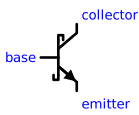
PnpSchottky
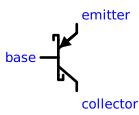
IgbtN
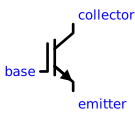
IgbtP
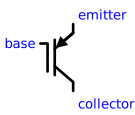
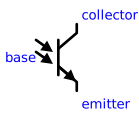
NpnPhoto
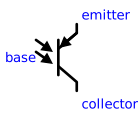
PnpPhoto
Field-Effect Transistors
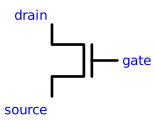
NFet
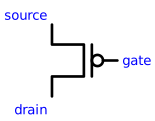
PFet
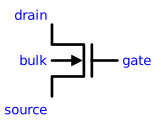
NFet(bulk=True)
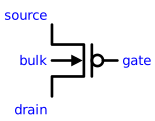
PFet(bulk=True)
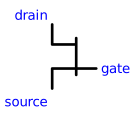
JFet
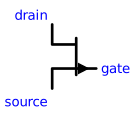
JFetN
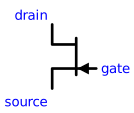
JFetP
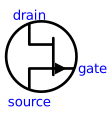
JFetN(circle=True)
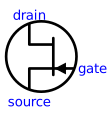
JFetP(circle=True)
Hemt
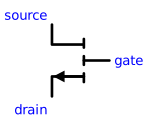
Hemt(split=False)
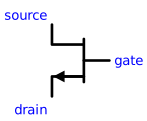
Hemt(arrow=False)
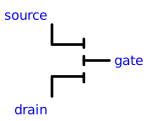
NMos
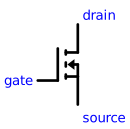
PMos
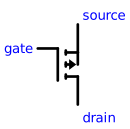
NMos(diode=True)
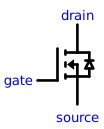
PMos(diode=True)
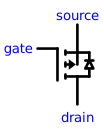
NMos(circle=True)
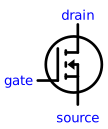
PMos(circle=True)
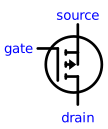
AnalogNFet
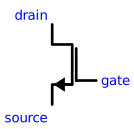
AnalogPFet
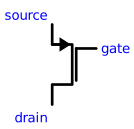
AnalogBiasedFet
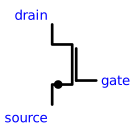
AnalogNFet(bulk=True)
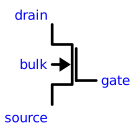
AnalogPFet(bulk=True)
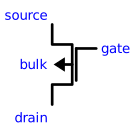
AnalogBiasedFet(bluk=True)
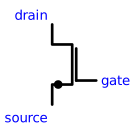
AnalogBiasedFet(arrow=False)
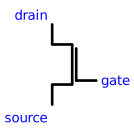
AnalogPFet(arrow=False)
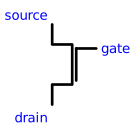
AnalogBiasedFet(arrow=False)
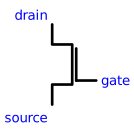
AnalogNFet(offset_gate=False)
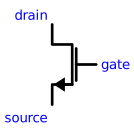
AnalogPFet(offset_gate=False)
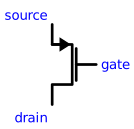
AnalogBiasedFet(offset_gate=False)
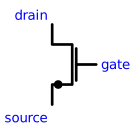
“Two-Terminal” Transistors
Another set of transistor elements subclass schemdraw.elements.Element2Term so they
have emitter and collector (or source and drain) leads extended to the desired length.
These can be easier to place centered between endpoints, for example.
BjtNpn2
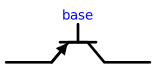
BjtPnp2
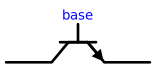
BjtPnp2c2
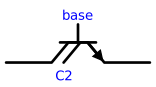
NFet2
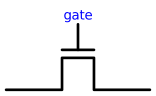
PFet2
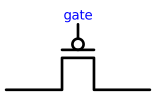
JFetN2
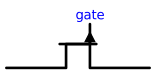
JFetP2
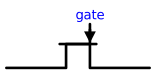
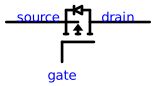
NMos2(diode=True)
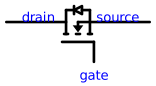
PMos2(diode=True)
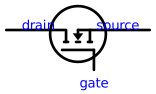
NMos2(circle=True)
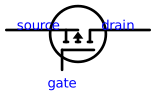
PMos2(circle=True)
Vacuum Tubes
A generic configurable vacuum tube is provided in schemdraw.elements.tubes.VacuumTube.
It may be created with any number of grids, an indirectly-heated or cold cathode,
multiple anode options, and an optional heater filament. Some options are below.
with schemdraw.Drawing():
    elm.VacuumTube(cathode='cold', anodetype='narrow', grids=0, heater=False)
    elm.VacuumTube(cathode='none', heater=True).at((3, 0))
    elm.VacuumTube(anodetype='dot', grids=2).at((6, 0))
    elm.VacuumTube(grids=8).at((9, 0))
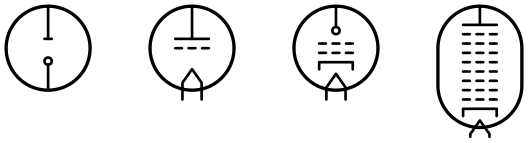
For the basic tube, anchors are anode, cathode, cathode_R (the right-hand connection to the cathode), grid, grid_R, and heater anchors heat1 and heat2. When multiple grids are present, the grid anchors are grid_N and grid_NR where N is the grid number from the top down.
Common vacuum tubes are defined from the base VacuumTube element.
The triode, tetrode, and pentode include anchors named for function: control, screen, and suppressor. The pentode includes a strap parameter to connect the suppressor to the cathode.
with schemdraw.Drawing():
    elm.TubeDiode().label('TubeDiode')
    elm.Triode().at((3, 0)).label('Triode')
    elm.Tetrode().at((6, 0)).label('Tetrode')
    elm.Pentode().at((9, 0)).label('Pentode')
    elm.Pentode(strap=True).at((12.5, 0)).label('Pentode(strap=True)')

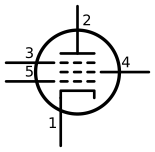
The anchors are positioned internal to the tube envelope to allow connection from either side. Connecting lines extend into the envelope, and pin numbers appear just outside.
with schemdraw.Drawing():
    tube = (elm.Pentode()
               .label('1', 'cathode')
               .label('2', 'anode')
               .label('3', 'suppressor')
               .label('4', 'screen_R')
               .label('5', 'control')
        )
    elm.Line().down().at(tube.cathode).length(1)
    elm.Line().up().at(tube.anode).length(.5)
    elm.Line().left().at(tube.suppressor).length(1)
    elm.Line().right().at(tube.screen_R).length(1)
    elm.Line().left().at(tube.control).length(1)
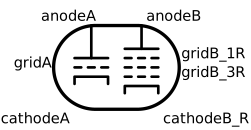
A dual vacuum tube may be drawn, with independent number of grids on each side. Anchors are designated A on the left element and B on the right element. schemdraw.elements.tubes.DualVacuumTube
with schemdraw.Drawing():
    t = (elm.DualVacuumTube(grids_left=1, grids_right=3, heater=False)
             .label('anodeA', 'anodeA', halign='right')
             .label('anodeB', 'anodeB')
             .label('cathodeA', 'cathodeA')
             .label('cathodeB_R', 'cathodeB_R', halign='left')
             .label('gridA', 'gridA', valign='center')
             .label('gridB_1R', 'gridB_1R', valign='center')
             .label('gridB_3R', 'gridB_3R', valign='center')
        )
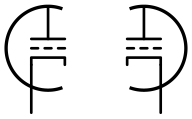
Sometimes, multiple tubes in one envelope are drawn in a split style. This may be enabled using split=’left’ or split=’right`.
with schemdraw.Drawing():
    tube1 = elm.Triode(split='left')
    elm.Line().down().at(tube1.cathode).length(1)
    tube2 = elm.Triode(split='right').at((2, 0))
    elm.Line().down().at(tube2.cathode_R).length(1)
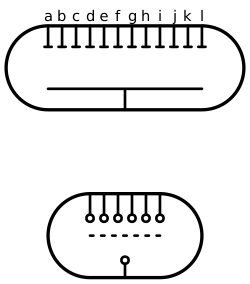
Nixie Tubes are multi-anode tubes drawn with schemdraw.elements.tubes.NixieTube.
The cathode may be cold, T or none and anodetype may be narrow or dot or none.
with schemdraw.Drawing():
    t = elm.NixieTube(anodes=12)
    for i in range(12):
        t.label(chr(ord('a')+i), f'anode{i}', halign='center', ofst=(0, .1))

    elm.NixieTube(anodes=6, anodetype='dot', cathode='cold', grid=True).at((0, -3.5))
Cables
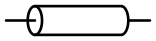
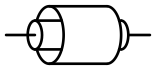
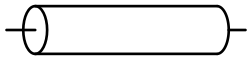
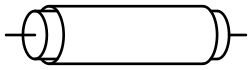
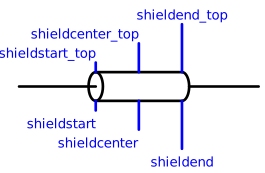
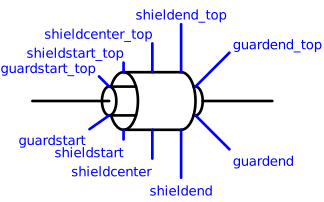
schemdraw.elements.cables.Coax and schemdraw.elements.cables.Triax cables are 2-Terminal elements that can be made with several options and anchors.
Coax parameters include length, radius, and leadlen for setting the distance between leads and the shell.
Triax parameters include length, radiusinner, radiusouter, leadlen, and shieldofststart for offseting the outer shield from the inner guard.
Coax
Triax()
Coax(length=5, radius=0.5)
Triax(length=5, radiusinner=0.5)
CoaxConnect

Transformers
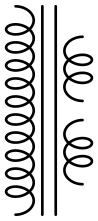
The schemdraw.elements.xform.Transformer element is used to create various transformers.
The number of turns on each side is set with the t1 and t2 parameters.
As integers, they define the total number of turns on that side.
Multi-phase transformers may be created by setting t1 or t2 to a tuple of turns for each phase.
Transformer
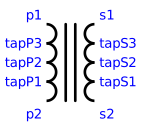
Transformer(loop=True)
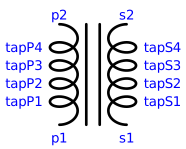
Transformer(core=False)
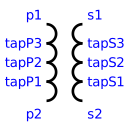
with schemdraw.Drawing():
    elm.Transformer(t1=10, t2=(2, 2), loop=True)